AI and Intellectual Property: Should Machines Hold Patents?
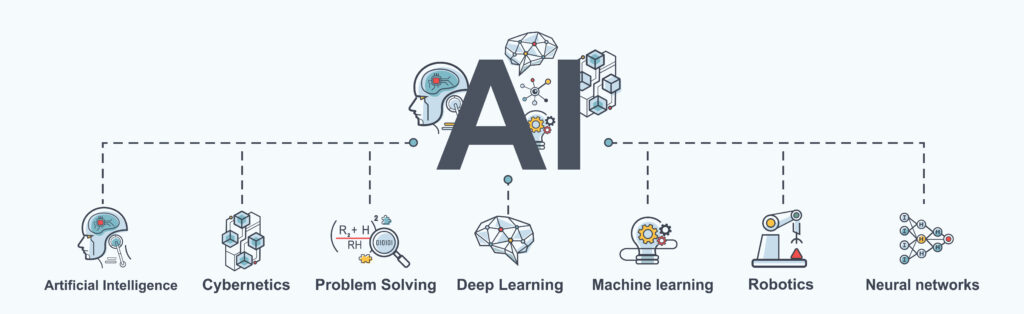
Legal debates have erupted around artificial intelligence inventions obtaining patent protection. Artificial intelligence (AI) is the simulation of human intelligence processes by machines, particularly computer systems. There are debates around whether the patent should be issued to the artificial intelligence or its creator. In this article, I will go over who may apply for a patent, as well as critically examine the Stephen L Thaler Vs Comptroller General of Patents, Design and Trade Mark ([2020] EWHC 2412 (Pat) case. I will then explain why South Africa gave the patent to Mr Thaler while the other countries denied it. Thus, this article will demonstrate that intellectual property laws must be amended to include the capacity to file a patent for an artificial intelligence technology.
Who may apply for a Patent?
In South Africa, according to Section 27 (1) of the Patents Act 57 of 1978,[1] a patent application for an invention can be filed by the inventor, a person who has acquired the right to apply, or both.
Similarly, section 13(2) of the United Kingdom Patents Act 1977 requires a person to be the inventor.[2]
The United States Patent and Trademark Office define an inventor as an individual, although an artificial intelligence system has never been deemed an individual.[3] According to Section 15 of the Australian Patents Act 1990, a patent for an invention can be given to an inventor or someone who has acquired rights from the inventor.[4]
The patent application for an artificial intelligence invention gets difficult because the term “person” is defined as a human being. This excludes artificial intelligence inventions. As a result, artificial intelligence is not recognized as an inventor under the patent laws of Australia, the United Kingdom, the United States of America, and South Africa.
The term “inventor” is not defined in the South African Patents Act. Nonetheless, the court determined in Hay v. African Gold Recovery Co (1896) 3 OR 244 at 277, a case decided in accordance with Zuid-Afrikaansche Republiek Law 6 of 1887: ‘The “first and true inventor” signifies that the person so described made the discovery himself, and that he did so before anyone else in any part of the world.’[5] Artificial intelligence inventions carry out tasks without human assistance or oversight.[6] For example, certain artificial intelligence systems have advanced to the point where they can create their own creations.[7] In such cases, the human being or the said natural person would not qualify as the inventor.
Thaler v. Comptroller-General of Patents, Designs, and Trademarks case
DABUS is an AI system created by Dr Thaler. Dr Thaler argued that he was authorized to file and pursue the patent application because he owns the equipment.[8] According to legislation, the DABUS machine made inventions but did not qualify as an inventor.[9] This was due to machine-made inventions that were created independently.[10] Therefore, the court ruled that the application was flawed because it failed to name any person as the inventor or demonstrate who derived the authority to be granted the patent.[11] Dr Thaler contended that artificial intelligence systems can generate inventions, and that the owners of such systems should be entitled for patent protection for those ideas.[12]
According to the United Kingdom Intellectual Property Office, Dr Thaler was instructed to register a state of inventorship and identify the individual thought to be the inventor.[13] Dr Thaler, on the other hand, insisted that he was not the inventor and provided what he believed to be a statement of inventorship.[14] This demonstrated that the inventions were generated by the artificial intelligence machine known as DABUS, and Dr Thaler had obtained the right to grant the patent because he was the owner of the machine.[15]
The court rebutted this argument on the basis that DABUS is not a person as envisaged by section 7 of the 1977 act which deals with the right to apply for and obtain a patent.[16] The court concluded that the applications would be withdrawn because Dr Thaler had not identified the person or people he believed to be the inventor(s), nor had he identified any appropriate basis for deriving a right to be granted the patents when he had only claimed to own DABUS.[17] These factors combined meant that DABUS did not meet the requirements to be considered an inventor under the 1977 Act because an inventor had to be a person.[18] Additionally, there was no general legal rule stating that any intangible property, including an invention made by a machine, belonged to the machine or its owner.[19]
How come other nations did not offer patent protection whereas South Africa did?
The South African Patents Act 57 of 1978, states that patents will be granted if the invention is new, has an inventive step, and has utility.[20] Moreover, the act defines that the inventor should be a person.[21] It does not extend the definition to artificial intelligence systems. Patent applications are evaluated based on both formalities and substantial content. A formal inspection ensures that all needed documents, including a power of attorney and patent specification, are submitted and fees are paid on time.[22]
Substantial examination reviews the patent specification to assess if the claimed invention is unique, creative, and applicable in South Africa. During this stage, the invention is scrutinized to ensure it meets the standards of the Patents Act and is eligible for patenting.[23] The majority of patent offices offer both, however, South Africa only undertakes a formal review of patent applications. This is why Dr Thaler was able to file a patent application for DABUS as an inventor, as it was not substantively investigated.[24]
All patent applications are examined substantively and formally by the patent offices of the United Kingdom, the United States of America, and Australia.[25] Dr Thaler’s applications to the different countries were refused because he failed to name a person as the inventor, and the terminology employed in their patent statutes did not extend the definition of a person to an artificial intelligence system.[26]
The regulations governing who can apply for a patent do not apply to artificial intelligence systems, and if future inventors of artificial intelligence systems want to acquire patent protection, the applicable regulations must be altered to include AI as an inventor. Indeed, others argue that if this occurs, it will devalue human inventorship. However, AI systems are rapidly evolving to the point where they can create their own inventions without human assistance.
[1] Section 27 (1) of the Patents Act No. 57 of 1978.
[2] Section 13 (2) of the United Kingdom Patent Act 1977.
[3] U.S. Code: Title 35.
[4] Section 15 of the Australian Patents Act 1990.
[5] Available at https://www.mylexisnexis.co.za/Index.aspx?permalink=emIvemtmYWEvYnN4aGEvN3I3Z2IvdWZ0amIvMGZ0amIvYml0amIkLTEkNyRMaWJyYXJ5JGRwYXRoJExpYnJhcnk
[6] Available at Can an artificial intelligence system be classified as an inventor? – De Rebus.
[7] Ryan Abbott, The Artificial Inventor Project, WIPO Magazine (Dec. 2019).
[8] Thaler v Comptroller-General of Patents, Designs and Trademarks [2021] EWCA Civ 1374.
[9] Ibid at para 2.
[10] Ibid.
[11] Ibid.
[12] Ibid at para 3.
[13] Ibid at para 9.
[14] Ibid.
[15] Ibid.
[16] Section 7 of the United Kingdom Patent Act 1977.
[17] Thaler v Comptroller-General of Patents, Designs and Trademarks [2021] EWCA Civ 1374 at para 17.
[18] Ibid.
[19] Ibid.
[20] Section 25 (1) of the South African Patents Act 57 of 1978.
[21] Section 27 (1) of the South African Patents Act 57 of 1978.
[22] Available at Can an artificial intelligence system be classified as an inventor? – De Rebus.
[23] Ibid.
[24] Ibid.
[25] Ibid.
[26] Ibid.